Reflections on Accountability, Human Behavior, and the Path Forward
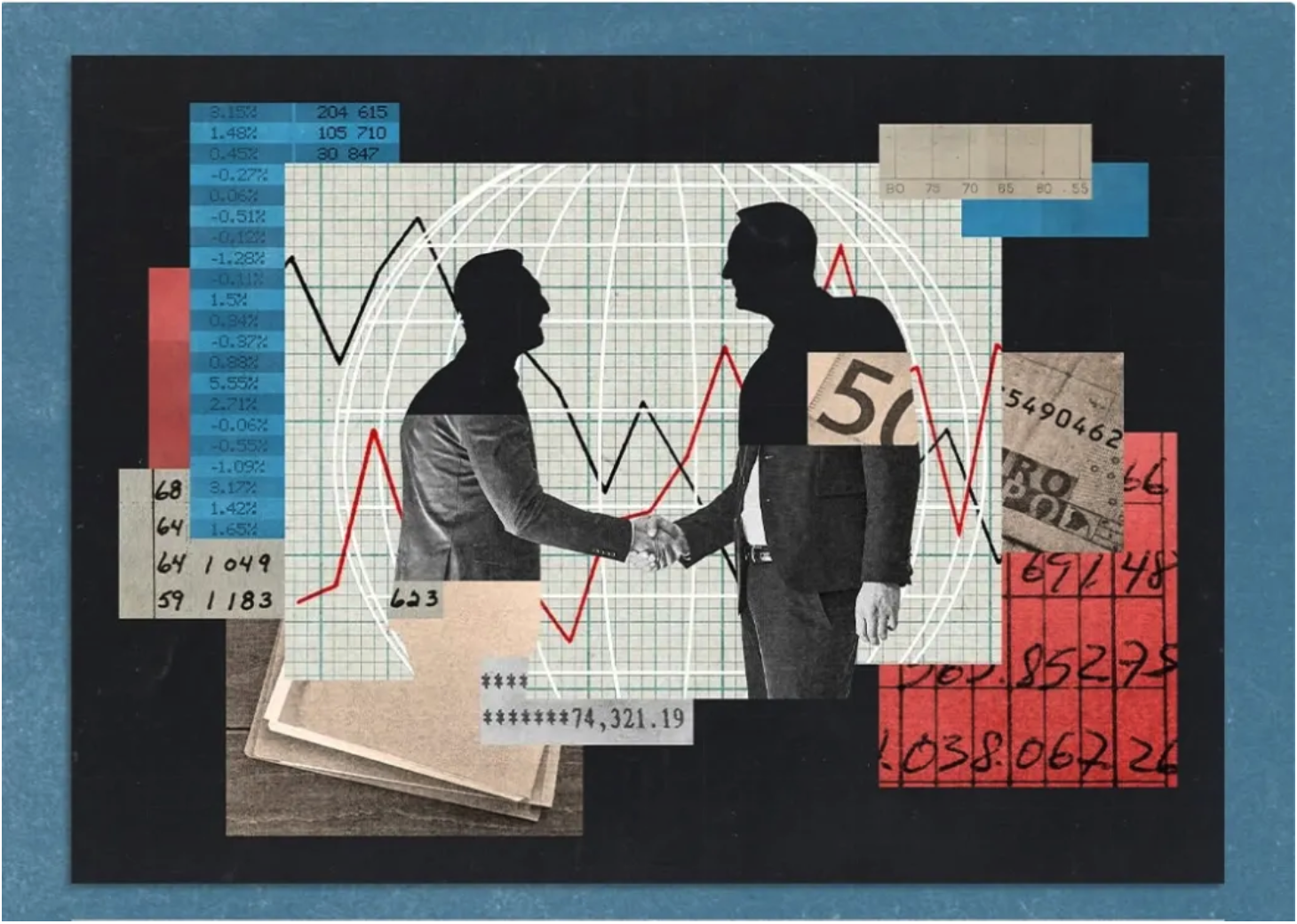
The question preoccupying financial markets today is whether artificial intelligence will generate sufficient profits for corporations to justify the extraordinarily high valuations of AI companies and the wave of corporate bond issuance supporting massive infrastructure investments. After careful consideration and reflection on extensive real-world observation, I have come to believe the answer is likely no, at least not in the transformative way many investors hope. The reasons run deeper than technology itself. They touch upon the fundamental nature of human organizations, the psychology of decision-making, and the intricate ways in which people navigate risk, responsibility, and relationships within large institutions.
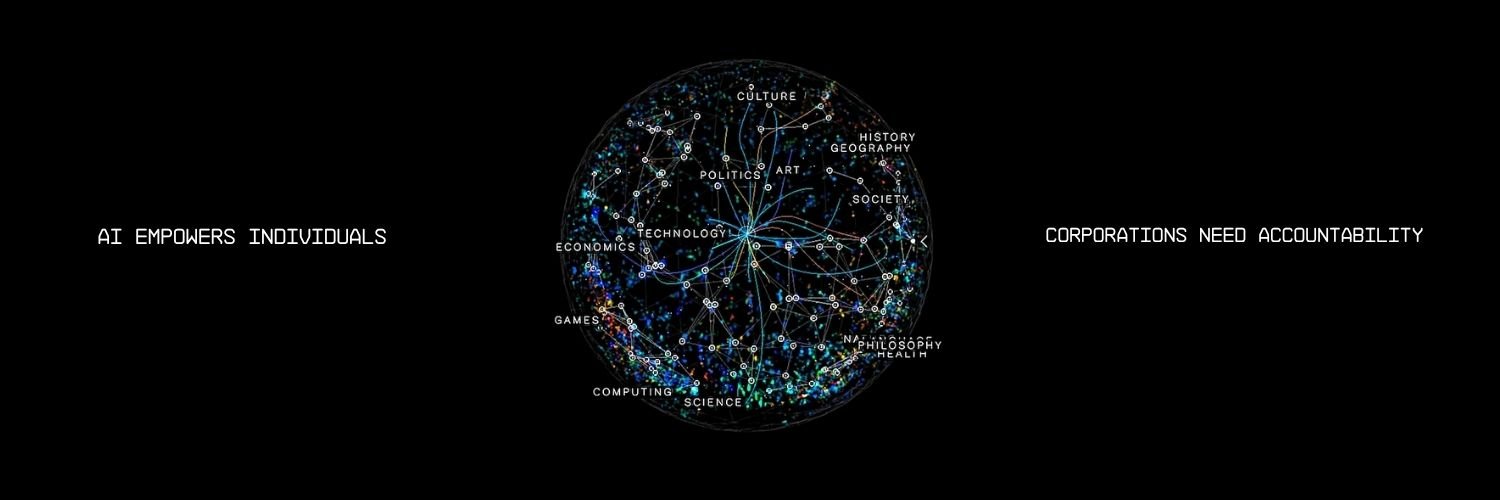
At its heart, this perspective distinguishes between two realms. On one side stand individual consumers, who derive immense and immediate value from AI tools. On the other stand corporations, which allocate resources according to different priorities. Having spent considerable time as a financial consultant working within the logistics sector and with various small businesses, I recognize this divide clearly through patterns observed across many engagements.
The Profound Value AI Delivers to Individuals
For individuals, the benefits of AI often feel almost magical in their capacity to reduce friction and expand capability. A paid subscription, modest in monthly cost, can return value many times over through practical assistance and cognitive relief. For example, I can snap a photo of ingredients in my fridge and receive thoughtful suggestions for meals I can prepare with what I already have on hand. What might once have required time-consuming searching or resulted in wasted food becomes an effortless and creative process.
In professional life, the advantages have been even more striking. This week alone, I completed a business manual for a client that generated four thousand dollars in revenue, yet the core assembly and structuring took me only fifteen minutes once I guided the AI with clear direction. The tool handled much of the organization, formatting, and expansion of ideas, allowing me to focus on the high-value elements that required my judgment and expertise. In professional and creative pursuits, AI can serve as a tireless organizer for scattered notes, ideas, and tasks, creating coherence where chaos once reigned. It functions almost as an executive assistant that never sleeps, surfacing connections and maintaining order across disparate information. For research, it excels at identifying high-quality primary sources from reputable institutions, far surpassing the noise of conventional search engines. These capabilities do not merely save time. They enhance the quality of thinking and the depth of understanding available to any curious mind.
Such experiences explain why many individuals willingly maintain their subscriptions. The value received feels personal, tangible, and disproportionately large relative to the price. Yet this consumer surplus, while real and important, does not automatically translate into proportional gains for the balance sheets of large corporations.
The Corporate Reality: Where Output Meets Accountability
Corporations operate according to a different logic. During my consulting work in the logistics sector, I repeatedly encountered environments in which employees committed long hours, sometimes extending to fourteen hours in a day, yet the portion consisting of deep, focused cognitive work that produced genuine insight or meaningful progress remained remarkably small, perhaps only two or three hours. The remainder involved coordination, meetings, status updates, iterative reviews, and the construction of consensus across multiple stakeholders.
This distribution of effort is not accidental or merely inefficient. It arises from the risk-averse nature of large institutions. In environments where mistakes can carry substantial financial, reputational, or regulatory consequences, participants naturally seek to distribute responsibility. Decisions pass through layers of approval precisely because no single individual wishes to bear the full weight of potential failure. This diffusion of accountability serves a psychological and protective function. It allows people to feel secure within the system, even as it slows progress and increases overhead.
Behavioral economics illuminates this dynamic with particular clarity. Human beings are not purely rational calculators of efficiency. We are profoundly influenced by emotions such as fear of regret, aversion to loss, and the desire for social harmony. In corporate settings, these tendencies manifest as elaborate structures designed to mitigate personal exposure. Committees form, documentation multiplies, and sign-offs accumulate not because they represent the optimal path to truth or value, but because they align with how people feel when navigating uncertainty and potential blame. The maintenance of this accountability architecture is expensive in both time and compensation, yet it persists because it addresses deep-seated human needs.
Artificial intelligence excels at accelerating analytical output. It can generate reports, analyze data, and produce summaries with remarkable speed and quality. However, it cannot assume the role of a responsible party whose judgment others can trust during moments of crisis. An AI-generated analysis in a complex field such as municipal bonds or supply chain optimization might prove useful, but when difficult questions arise, organizations still require a human expert whose opinion carries the weight of accountability. Similarly, in teaching and other knowledge-intensive roles, AI can draft excellent summaries far more quickly than one could unaided. Nevertheless, the true value of preparation often lies in the internalization of knowledge and the ability to engage authentically with others. The process of learning cannot be fully outsourced without diminishing the quality of the human connection at the center.
In my work with small businesses, I have seen a different but related pattern. While these organizations move with somewhat greater agility than massive enterprises, they too contend with the human realities of risk, relationships, and the need for trusted decision-makers. The behavioral forces at play remain consistent even at smaller scales.
Implications for Large Corporations and the Workforce
Given these realities, many large corporations will likely proceed along a path of incremental adaptation rather than radical transformation. They will integrate AI tools where risks remain low and accountability can still rest comfortably with human teams. Certain operational efficiencies will emerge, particularly in areas such as data processing, scheduling, and routine analysis within logistics and operations. Yet the fundamental architecture of decision-making, with its emphasis on consensus and risk diffusion, will change more slowly. As a result, overall profit growth attributable to AI may fall short of expectations, even as total spending on technology and talent continues to rise.
This creates a persistent tension. People require meaningful work and stable income, yet many corporate roles involve substantial inefficiency when viewed through a narrow lens of productivity. Organizations tolerate and even require this inefficiency because it serves broader purposes related to stability, compliance, and human psychology. The coming years may therefore feature hybrid arrangements in which AI augments human effort without fully displacing it. New positions focused on oversight, verification, and ethical governance of AI systems could emerge to fill the gap.
A More Promising Horizon for Solopreneurs and Small Businesses
By contrast, the outlook appears considerably brighter for solopreneurs, freelancers, and small independent operators. Without layers of bureaucracy or diffused responsibility, individuals can harness AI directly in service of their own judgment and vision. A solopreneur might use these tools to manage complex projects, conduct rapid research, generate initial drafts, and maintain organized systems of knowledge, all while retaining full accountability and creative control. The absence of committee approvals allows speed and agility that large organizations struggle to match. Small businesses, too, stand to gain significantly when owners can apply AI personally without navigating institutional inertia.
In this sense, we may be witnessing the early stages of a shift in advantage toward smaller, more nimble economic actors. If we are indeed approaching what some describe as a singularity, an era of rapidly accelerating intelligence and capability, then independent creators and thinkers stand to benefit disproportionately. They can integrate AI into their workflows without the inertial drag of institutional psychology. This could foster a renaissance of solo and small-team entrepreneurship, with individuals building sustainable businesses that leverage technology while preserving human meaning and responsibility at their core.
Broader Questions in an Interconnected World
These developments invite us to consider even larger contexts. Technological progress does not occur in isolation. We must account for environmental systems, resource constraints, energy demands, and societal implications. Training and operating advanced AI models requires significant computational resources, water for cooling, and electricity, raising important questions about sustainability alongside growth. Geopolitical dynamics, regulatory frameworks, and questions of economic inequality will also shape how these technologies unfold across logistics networks, small business ecosystems, and beyond.
From a behavioral economics perspective, the central insight remains that human feelings and social structures exert enormous influence over systems. Fear, trust, status, and the need for belonging shape organizations as powerfully as any algorithm. If AI is to deliver its full potential, we may need not only technical advances but also thoughtful evolution in how we design institutions to work in harmony with human nature rather than against it.
I continue to circle these questions in my own thinking. How can we create organizations that balance accountability with agility? What new social contracts might emerge as AI reshapes labor markets? And how do we ensure that technological abundance serves human flourishing within the limits of our shared planetary systems?
I would welcome your perspectives in the comments. Whether you work within large institutions, operate independently as a solopreneur or small business owner, or simply observe these changes with interest, your experiences and reflections will enrich the conversation. The future remains unwritten, and its shape will depend not only on what AI can do, but on how we choose to integrate it into our lives, our work, and our societies.