The first light- Awareness
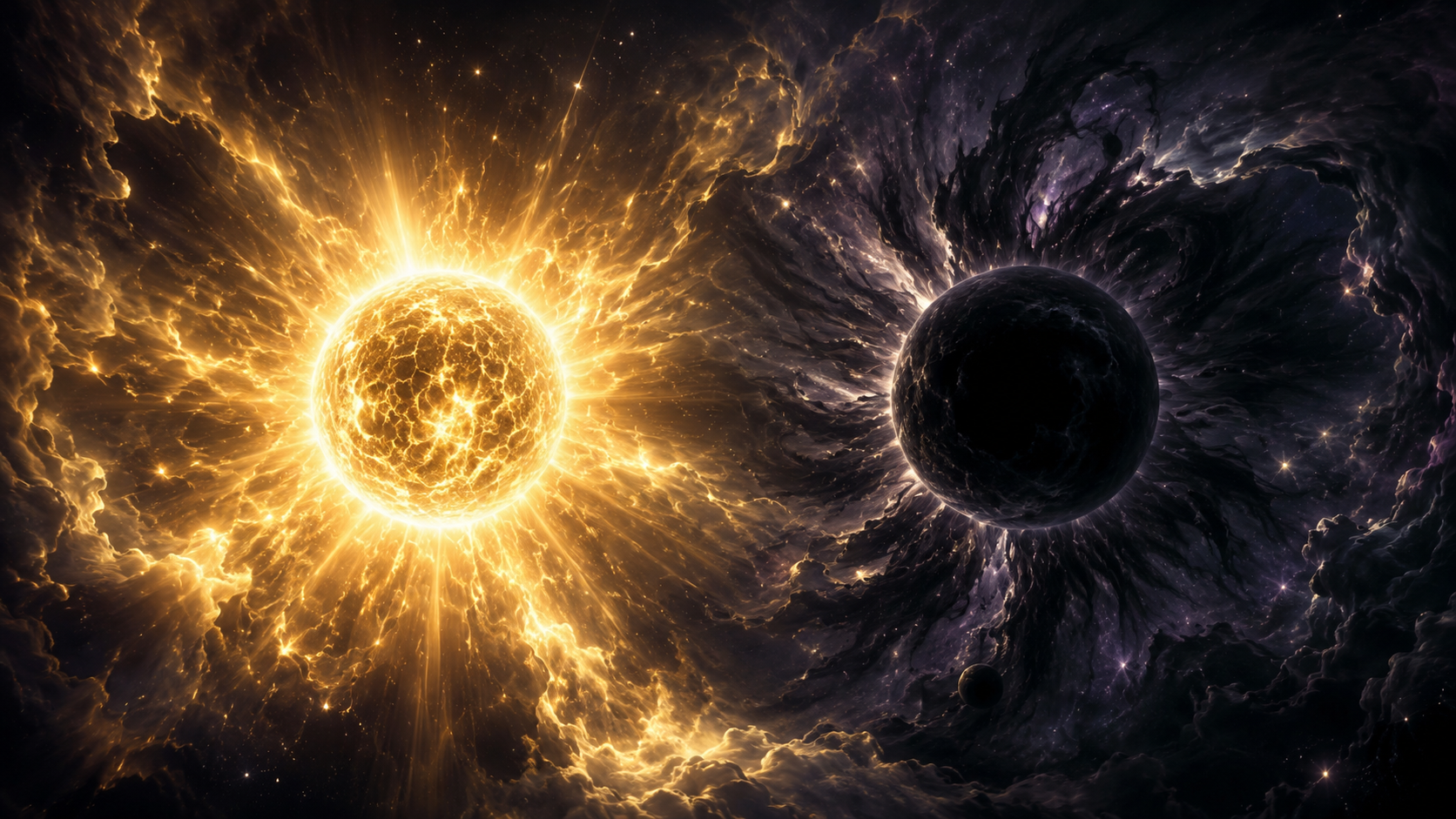
There is a light that every human being has seen, chased, worshipped, and built entire civilizations around, and then there is another light so fundamental, so prior to all experience, that almost no one has ever recognized it for what it is, not because it is hidden exactly, but because it is so utterly still, so completely without drama or announcement, that the ordinary mind simply passes over it the way a person in a loud room passes over silence without ever registering that the silence was there first, holding everything the noise was made of. This distinction, between these two orders of light, was not a footnote in the ancient Mystery Schools of Eleusis, of Chaldea, of the Nile traditions, of the great Vedantic lineages of India. It was the entire teaching. It was the secret the initiates spent years, sometimes lifetimes, being guided toward, not as a concept to be memorized but as a living recognition to be arrived at from the inside, the way you arrive at the understanding that you have been breathing all along even when you were not thinking about breathing.
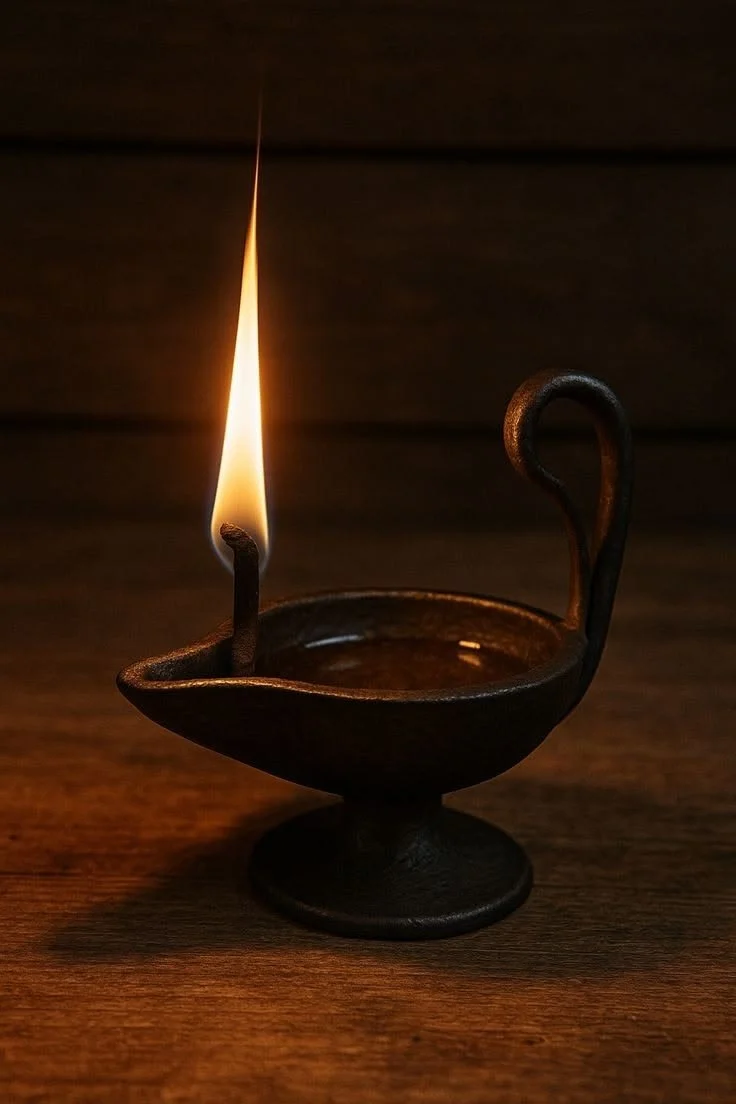
To feel your way into this, begin with something you already know. Imagine a single candle burning in a room that is otherwise completely dark. The flame moves, flickers, reaches upward and then bends sideways when a draft passes through, and it throws light outward in all directions, casting shadows on the walls that shift and dance in response to every small tremor of the flame itself. Everything in the room becomes visible because of that flame, and so naturally, inevitably, your attention goes there. The flame is beautiful. It is warm. It is the most alive and dynamic thing in the room, and it feels, in the most immediate and sensory way, like the realest thing present. But here is what the mystery schools were pointing at, the thing that requires you to slow down and look again with a different quality of attention: the flame is not sustaining itself. It is burning inside something. It is burning inside the air, which has no flicker, no drama, no warmth you can feel from across the room, no shadows it casts anywhere. The air does not announce itself. It does not perform. It simply is, quietly and completely, the invisible condition that makes everything the flame does possible. Take the air away and the flame does not diminish gradually or struggle or find another way. It collapses, instantly and completely, into nothing.
This image is not a metaphor the ancients invented to make a philosophical point more palatable. It is a precise description of the actual structure of reality, a structure that every genuine wisdom tradition across the ancient world, regardless of the language it spoke or the culture it arose from, arrived at independently and described with a consistency so remarkable that it can only mean they were all perceiving the same thing. The flame is what the traditions called the secondary light, which they also called illumination, and which, when you begin to feel into the word rather than just read it, reveals itself to mean something very specific: not light itself, but the effect of light upon matter, the disturbance, the agitation, the perturbation of a medium by a force moving through it. Illumination is always movement. It is always change. It is always something arising, burning for a time, and then passing, the way the candle flame arises from wax and oxygen and heat and eventually consumes itself entirely, the way a thought arises in the mind and holds your attention completely for a moment and then dissolves back into the silence it came from. Everything that belongs to the category of secondary light shares this quality of arising and passing, of being beautiful and real in its own register while simultaneously being entirely dependent on something else for its existence.

That something else is what the ancients called the primary light, and this is where the teaching asks something genuinely difficult of you, because the primary light is also called the primary darkness, and holding both of those names for the same thing without collapsing into confusion is itself a kind of initiation. The primary light is dark to ordinary perception not because it is absent or deficient or less than the secondary light, but because it does not shine, does not flicker, does not produce the contrast between brightness and shadow that the ordinary senses require in order to perceive anything at all. It is the air in the room, which you cannot see even when the candle is burning.
It is the stillness underneath the sound, which you cannot hear while you are listening to the music. It is the awareness in which every experience arises, which you cannot find by looking for it as an object because it is the very looking itself, prior to whatever is being looked at. The ancient traditions gave this ground many names: the Aether in the Greek and Chaldean lineages, Brahman in the Vedantic tradition, the Agathon or the One in the Platonic and Neopythagorean schools, the Ain Soph in the Kabbalistic lineage, the Tao in the Chinese tradition. The names differ because the cultures differ and because this reality exceeds every name given to it, but what they are pointing at is precisely and exactly the same thing in every case: the undisturbed medium beneath all of reality, the substrate that makes waves possible without itself ever becoming a wave, the ground condition of everything that has ever arisen or will ever arise, which itself neither arises nor passes but simply is, in a register of being so fundamental that the ordinary mind, which is itself a kind of flame, a perturbation, a movement through the medium, simply cannot perceive it by its usual methods.
Now here is where this teaching stops being philosophy and begins to be something you can actually feel in your own experience, something that changes the way you move through your life and understand what is happening when you practice, when you sit in silence, when you enter the receptive state that genuine spiritual work requires. Everything you have ever called a spiritual experience belongs, in the framework of the two lights, to the category of the secondary light. Every flash of insight that arrived and then faded. Every ecstatic state that opened something in you and then closed again. Every moment of beauty so precise and so sharp that it felt like contact with something eternal, and then passed the way all beautiful moments pass. Every vision, every feeling of expansion, every sense of connection to something larger than the ordinary self. All of it is real. All of it matters. None of it is to be dismissed or devalued. But all of it is the flame, not the air. All of it is perturbation, agitation, movement through the medium, which means all of it is dependent on something else for its existence, and all of it arises and passes in time, which means none of it is the source.
This is not a discouraging teaching if you receive it correctly. It is not saying that your experiences have been worthless or that the path you have walked has led you nowhere. It is saying something far more precise and far more liberating than that: it is saying that what you have been seeking through those experiences, the thing that made each of them feel like a glimpse of something true and permanent and home, was not the experience itself but the ground the experience was arising in. The silence holding the music. The stillness holding the movement. The air holding the flame. And that ground was never absent. It was never somewhere else. It was never waiting for you to have the right experience or reach the right state or accumulate the right understanding before it would reveal itself. It was here, underneath every experience you have ever had, including the most ordinary and the most unremarkable, as close as the awareness that is reading these words right now, as intimate as the space between one thought and the next.
The ancient teachers encoded this understanding in stories and images precisely because the discursive mind, the mind that thinks in sequences and causes and effects, cannot grasp it directly. Plato placed it at the center of the allegory of the cave, a teaching that did not originate with Plato but that he received and transmitted from a lineage far older than Athens. In that allegory there are prisoners chained at the bottom of a cave who can only see the wall in front of them, upon which shadows are cast by a fire burning behind them. The fire is the secondary light, real enough to cast shadows, warm enough to feel across the cave, vivid enough to hold the prisoners' complete attention for their entire lives. Outside the cave is the sun, which the prisoners cannot see at all, not because the sun is not shining but because their entire orientation has been toward the fire and the shadows for so long that the idea of turning around and walking toward the mouth of the cave and then into a light so much greater than the fire that it would initially blind them is not only uncomfortable but genuinely unthinkable. The journey that Plato is describing is not the journey toward more or better illumination. It is the journey of reorientation, the turning of the whole being away from the drama of the secondary light and toward the primary light that was always there, outside the cave, prior to the cave, indifferent to whether anyone in the cave acknowledged it or not.
Two darknesses accompany the two lights, and understanding them completes the map. The first darkness is the one most people recognize as darkness, the shadows on the wall of the cave, the realm of forms and phenomena at their most contracted and most dense, the world of pure materialism where consciousness has become so absorbed in the drama of secondary light that it has entirely forgotten the medium it is swimming in. Every tradition across the ancient world identified excess as the defining characteristic of this darkness, not excess in the modern sense of having too much of something pleasant, but excess in the metaphysical sense of having moved so far from the center, from the source, from the undisturbed ground, that the return becomes genuinely difficult to imagine. This is not a moral judgment. It is a description of a distance.
The second darkness is far subtler and, in many ways, far more important for the practitioner to understand, because it is the darkness of the primary light itself. The ground of all being does not shine. It does not illuminate. It cannot be perceived by the ordinary senses, and it cannot even be perceived by the ordinary mind, which is itself a form of secondary light, a perturbation of the very medium it is trying to perceive. This is why the traditions spoke of the dark sun, the hidden source, the unseen light behind all light, not as a poetic flourish but as a precise phenomenological description of what the sincere practitioner actually encounters when the movement toward the primary light is genuinely undertaken. The ordinary instruments of perception, the senses, the analytical mind, the memory, the imagination, all of them are flames. And flames cannot perceive the air they burn inside of by the same method they use to perceive other flames. A different quality of attention is required, one that the traditions variously called contemplation, Samadhi, Jhana, Epistrophe, the via negativa, the neti neti of Vedanta, which means not this, not this, the systematic relinquishment of identification with every form of secondary light until what remains is the recognition of what was never a form at all.
What this means for you as a practitioner is both simple and genuinely radical. Every tradition that teaches you to produce more light, to generate more experience, to reach higher states, to accumulate more illumination, is teaching you, with the best of intentions, to tend a more beautiful flame while calling it the sun. The practices are not worthless. The flame is not the enemy. But if the goal is the sun, then at some point the orientation must shift, not from one kind of flame to another, but from the flame entirely toward the air it burns inside of, the ground that was there before the practice began and will be there after every state has arisen and passed, the medium that makes everything possible without itself ever becoming anything in particular.
That medium is not somewhere else. It is not at the end of a long spiritual journey waiting to be earned. It is the stillness you can sense right now underneath the movement of thought, the silence holding the words you are reading, the awareness prior to the content of awareness, so close and so constant that the mind perpetually overlooks it in its search for something more dramatic, more luminous, more like a flame. The mystery schools did not whisper their deepest secrets because they were being secretive. They whispered because the deepest secrets require a quality of listening that the noise of ordinary life does not cultivate. They require you to become interested, genuinely and patiently interested, in the air rather than the flame. In the stillness rather than the movement. In the ground rather than what grows from it.
That interest is itself the beginning of the turning. And the turning, as every genuine tradition across every age has confirmed, leads not to a new experience but to the recognition of what was never absent: the primary light, dark to ordinary perception, prior to all illumination, the undisturbed ground of everything you have ever been and everything you will ever know.
Celinne